In this article
We made “Come as you are.”, an unofficial McDonald's concept ad, entirely in code with Claude Code and Remotion: 870 frames at 60 fps, every event on a 120 BPM grid, no imported image and no music, only 142 synthesized sound effects. This making-of walks through the 8 shots, the sound design, the versions and the blind test of its 15,453-word prompt.
“Come as you are.” is a 14.5-second McDonald's concept ad that we built entirely in code with Claude Code and Remotion: 870 frames at 60 fps, no imported image, no stock footage, no music. Every cut, impact and pop sits on a 120 BPM grid, and the soundtrack is 142 synthesized sound effects placed by a Python script.
This is the full making-of, shot by shot, with the real numbers from our project files. One thing first, because it matters: this is an unofficial concept. McDonald's did not commission it, did not pay for it and has nothing to do with it. We make concept films for brands we like to show what the method can do.
It is also our reference film. When we reviewed our second series of brand concepts, this one came out on top, and it performed best on our social accounts at the time. Every film we have made since gets compared to it.
The brief: one grid, no music
The whole series was written against one rule: 120 BPM, which at 60 fps gives 1 beat = 30 frames, an eighth note = 15 frames and a sixteenth note ≈ 7.5 frames (we alternate 7 and 8). Cuts, impacts, pops, appearances and scene changes all have to land on that grid. One bar is 120 frames, so two seconds.
The second rule: no music. No beat, no bass, no melody, no jingle. Every sound follows something that moves on screen. The rhythm comes from events placed on the grid, not from a track underneath. That constraint is the reason the film feels “musical” without a single note of music: your ear hears a beat because 142 sounds land on it.
The third rule came from our own review: one signature moment per film. Here, it is the Warhol-style grid in the drop.
The timeline: 8 shots in 14.5 seconds
Here is the structure from the prompt. Shots overlap: the next one often starts while the previous one is still leaving.
| Shot | Frames | Seconds | What you see |
|---|---|---|---|
| 1 · The marker M | 0 → 108 | 0.00 → 1.80 | The arches are drawn in yellow marker on red, fill in, jump, land, then fly into the kiosk header |
| 2 · The kiosk | 88 → 331 | 1.47 → 5.52 | An ordering kiosk rises; Big Mac, Fries, Coke are added; the total rolls up to $11.40; “Place Order” → “Paid” |
| 3 · The receipt | 238 → 330 | 3.97 → 5.50 | The receipt prints in 4 jerks, tears off, unfolds to fill the screen |
| 4 · The Big Mac | 314 → 451 | 5.23 → 7.52 | 5 layers fall on the eighth notes, one giant word per layer, then “BIG MAC” |
| 5 · The fries | 444 → 539 | 7.40 → 8.98 | Diagonal black wipe, the fry box drops, 22 fries rain into it, “FRIES” |
| 6 · Breather | 540 → 599 | 9.00 → 9.98 | Silence. White background, a pager showing 083 vibrates alone, “Order up.” |
| 7 · The drop | 600 → 689 | 10.00 → 11.48 | The tray falls, pop-art explosion, “BIG MAC”, a 2×2 then 4×4 grid, zoom into one cell |
| 8 · Logo | 690 → 869 | 11.50 → 14.50 | White flash, the M is redrawn on red, impact, ring, “Come as you are.” word by word |
All of those frame numbers come from a single file, timeline.json, which both the picture and the sound script read. That is the most useful decision in the whole project: when picture and sound share one timing table, they cannot drift apart.
Scene by scene
Shot 1 · The M is drawn, squashes, jumps
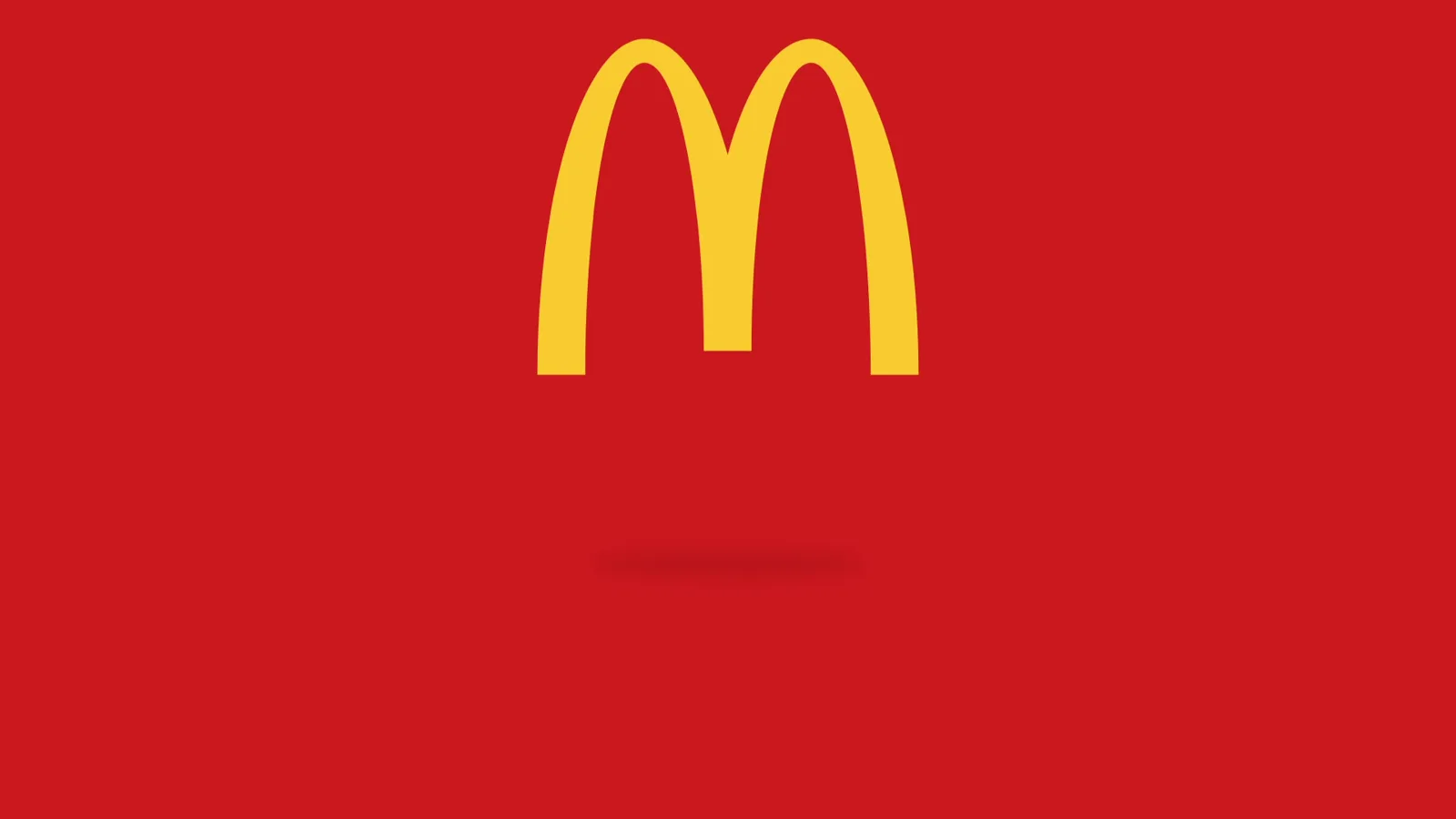
The marker stroke runs from frame −12 to 26 (it starts before the film so frame 0 already moves), the fill hits at 30, the squash at 42, the launch at 48, the landing at 75 and a second bounce at 90. The lesson is in two numbers: six frames of squash before the jump. Without them the M would teleport.
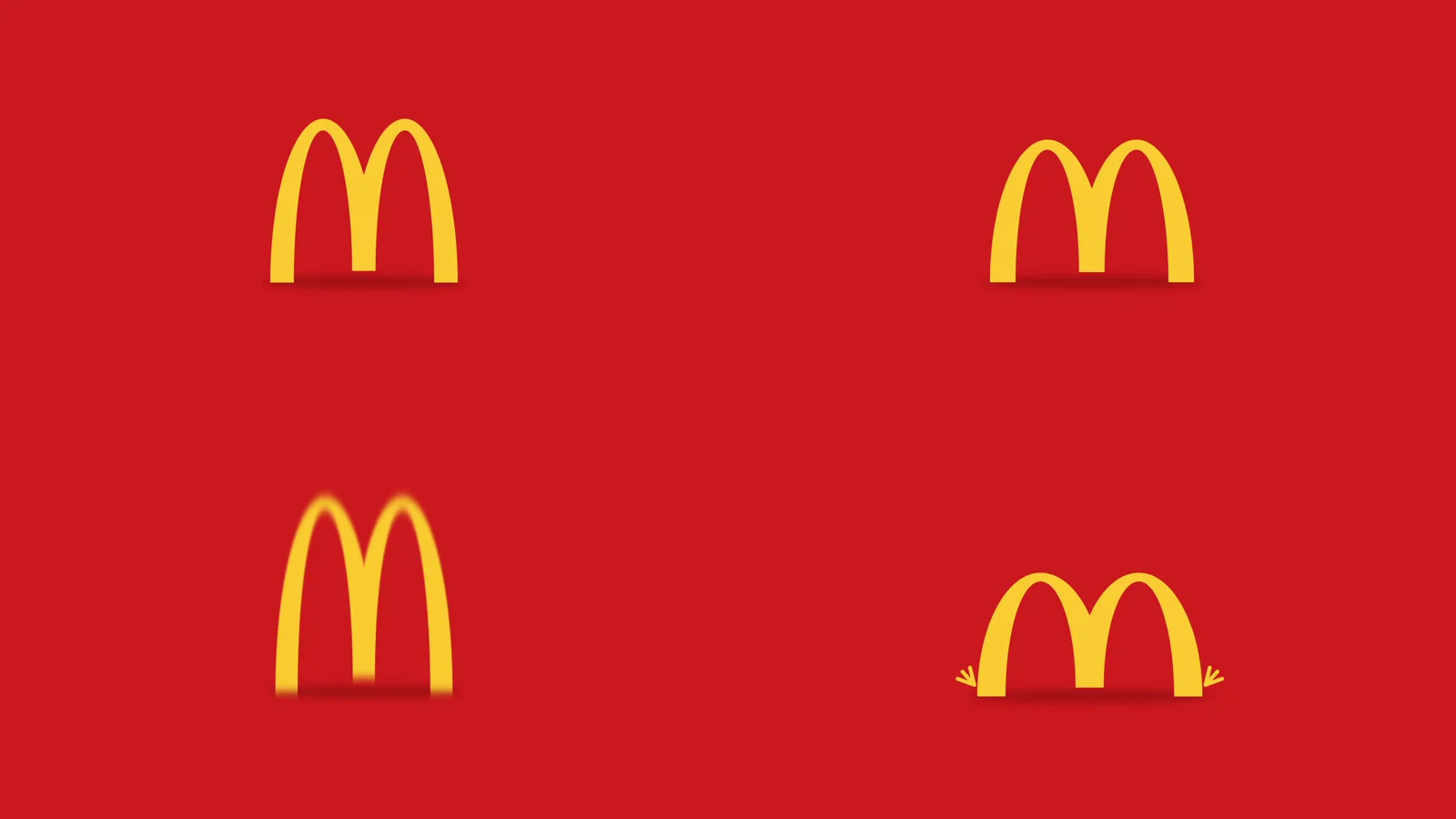
The sound follows the same beats: a fryer sizzle under the drawing (the M is “cooked”), a short kick when it fills at 0.500 s, a rising tone on the jump, and a soft thud at 1.250 s when it lands. We deliberately used a round thud and not a kick there. A kick has a click, and a click sounds like a drum machine.
Shot 2 · The kiosk
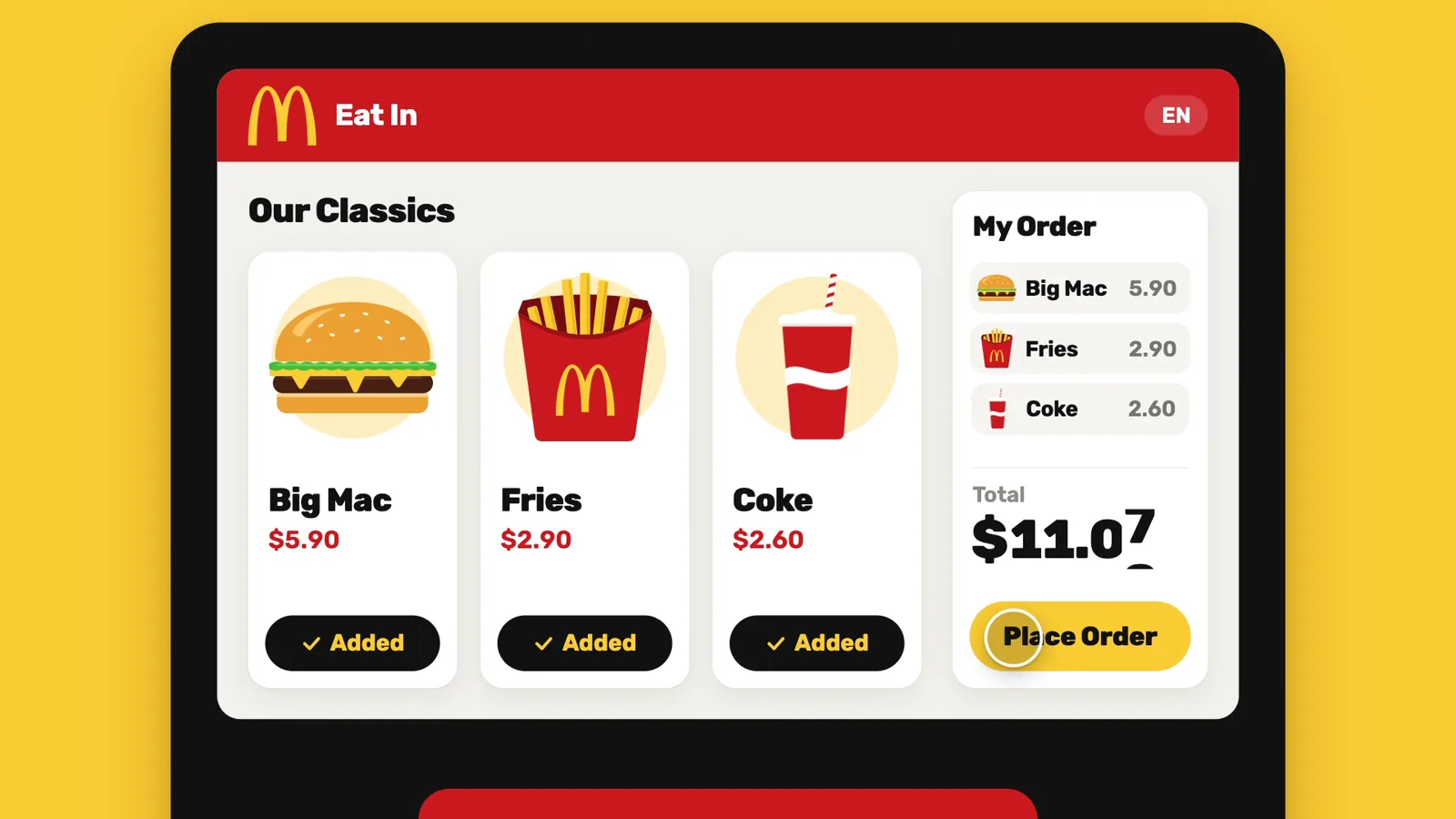
This is the densest shot of the film: about 40 elements and several nested coordinate systems (the world, the kiosk screen, the basket). The finger taps on frames 120, 150 and 180, one per beat. Each item lands in the basket 15 frames later (135, 165, 195), on the off-beat. The order is placed at 210 and the camera pans down at 225.
The detail we like most: the three glass taps are tuned to 2,500, 2,620 and 2,740 Hz, so they rise slightly from one tap to the next, and they pan from the left toward the centre as the finger moves across the screen. The total is an odometer with carries, so the digits roll like a real counter. The register “cha-ching” at 3.530 s closes the payment.
Shot 3 · The receipt
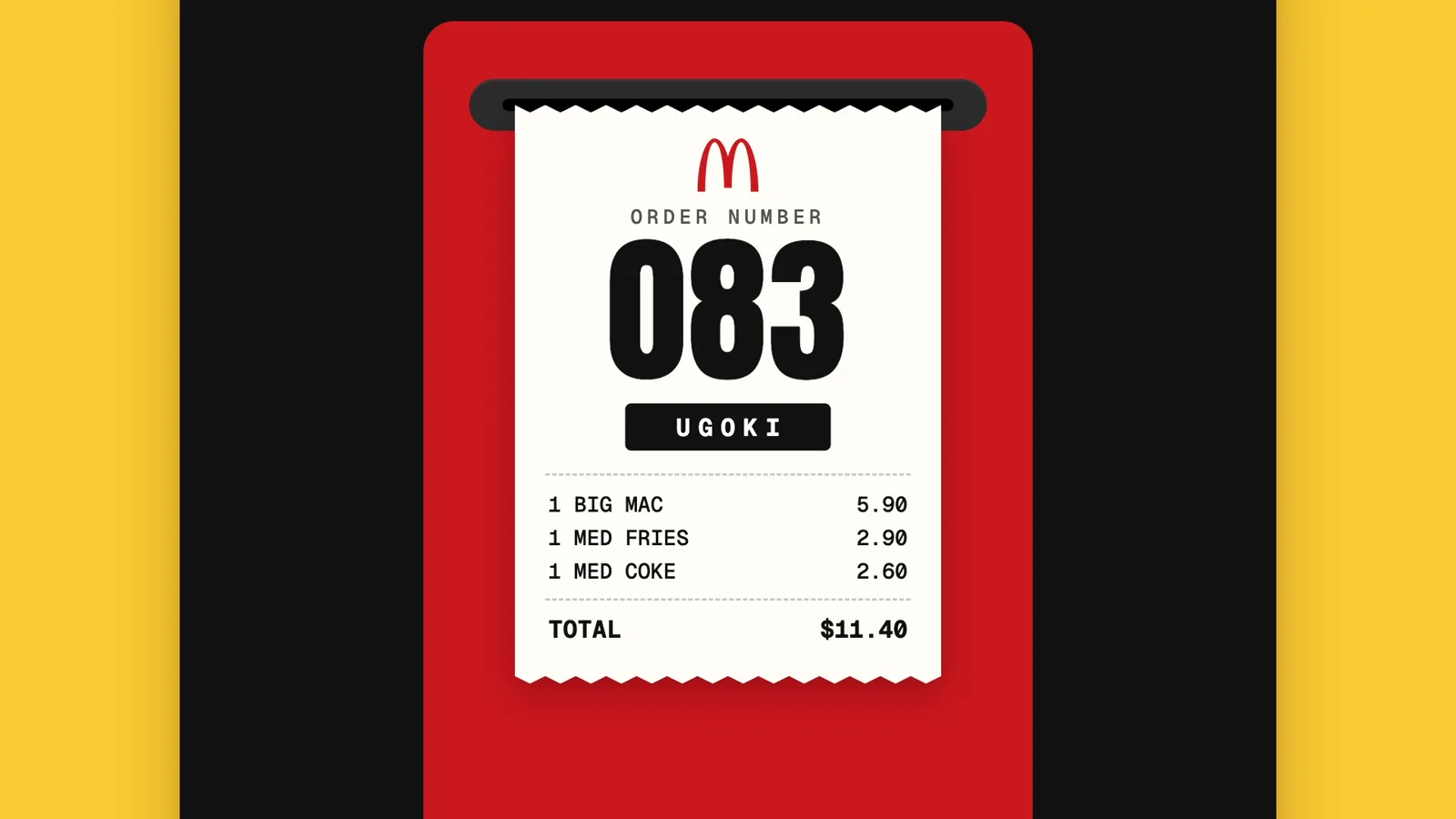
The printer advances in four jerks on the eighth notes (240, 255, 270, 285). Each printer sound is slightly longer than the last (100, 105, 110 and 115 ms), so the four jerks are never identical. The tear lands at frame 300; its sound starts 1.8 frames (30 ms) earlier, so the rip is already under way when the paper separates. Then the receipt unfolds until it becomes the white background of the next shot.
Shot 4 · The Big Mac, one layer per eighth note
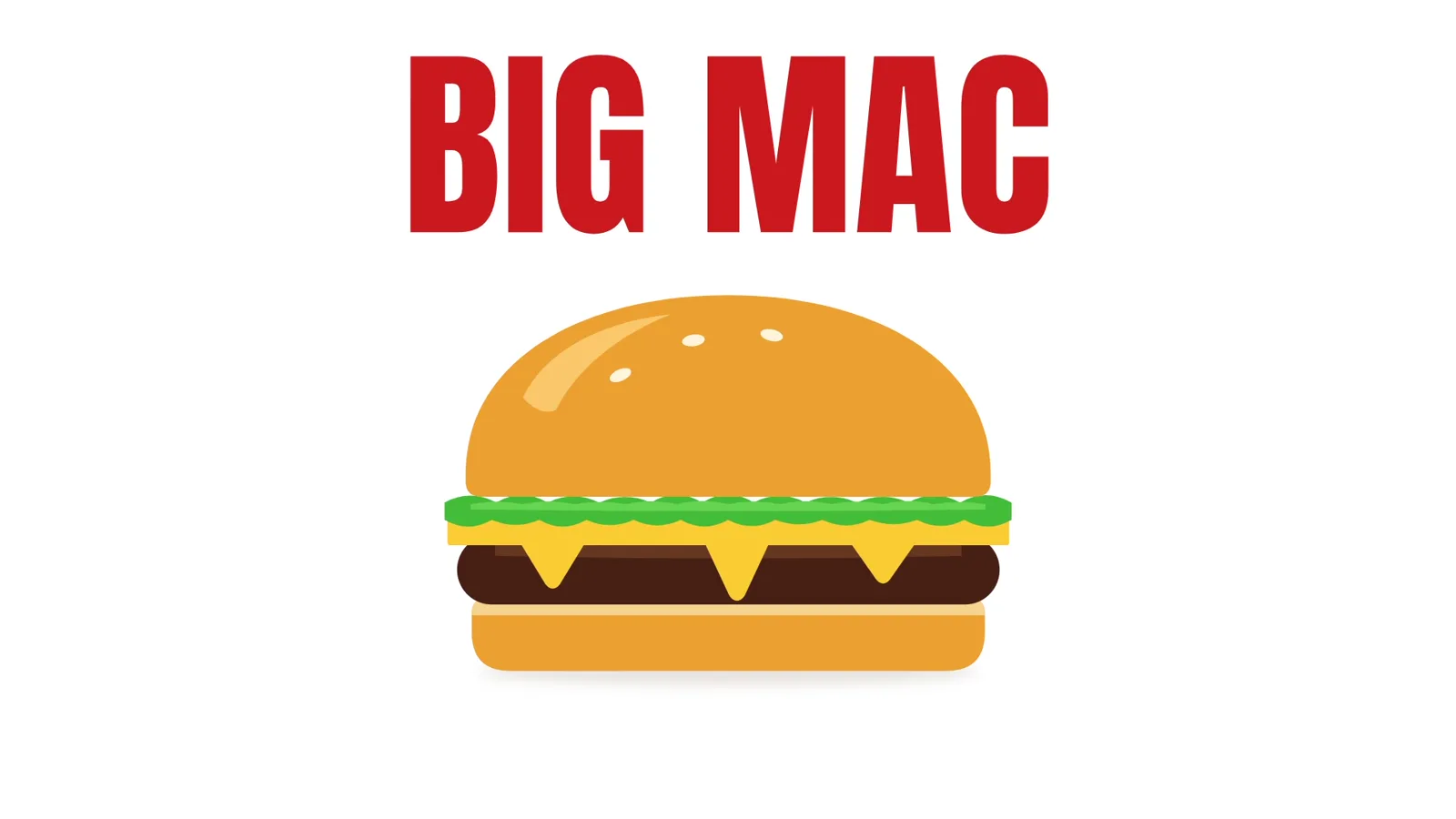
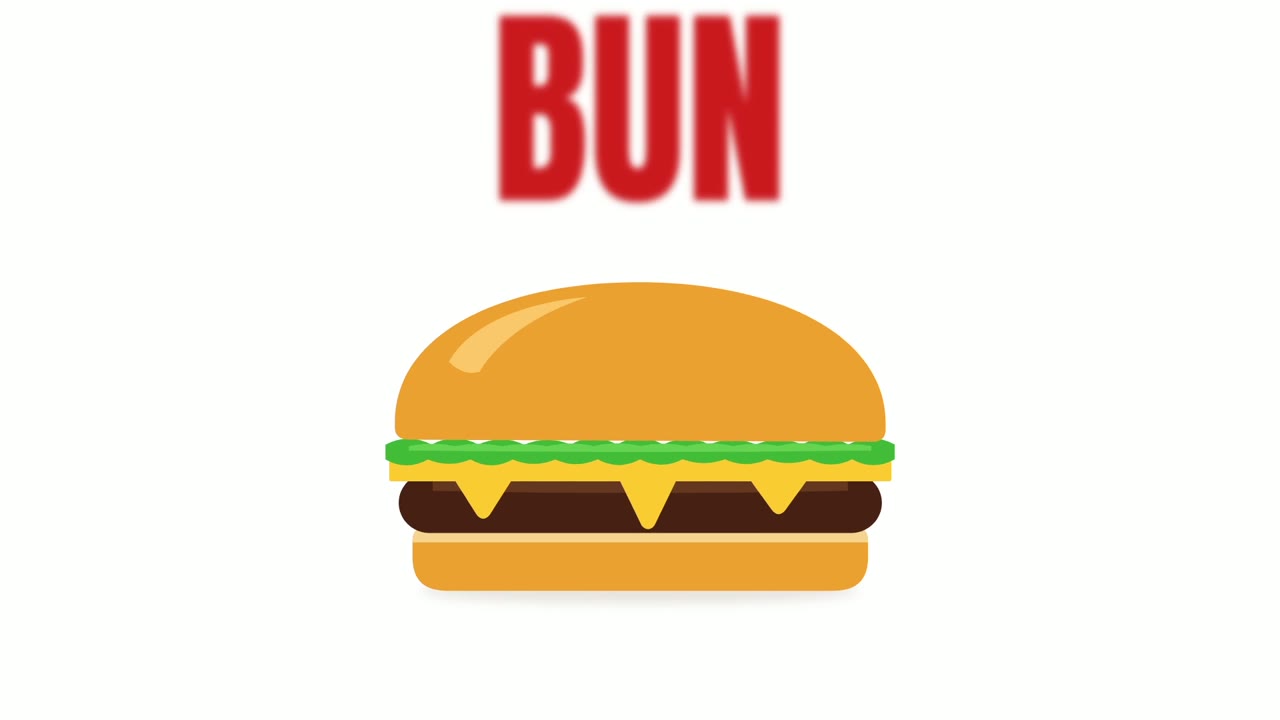
Five layers fall on frames 330, 345, 360, 375 and 390, each with its own giant word: BUN, BEEF, CHEESE, LETTUCE, BUN. The title “BIG MAC” hits on 405, then four sesame seeds pop on 412, 420, 427 and 435.
Each layer has its own material sound, and this is where most AI-made ads fall flat. The buns are soft thuds at different pitches, the beef is lower and heavier, the cheddar is a wet “splat”, the lettuce is a crunch made of crackle. Same rhythm, five different textures.
Shot 5 · The fries
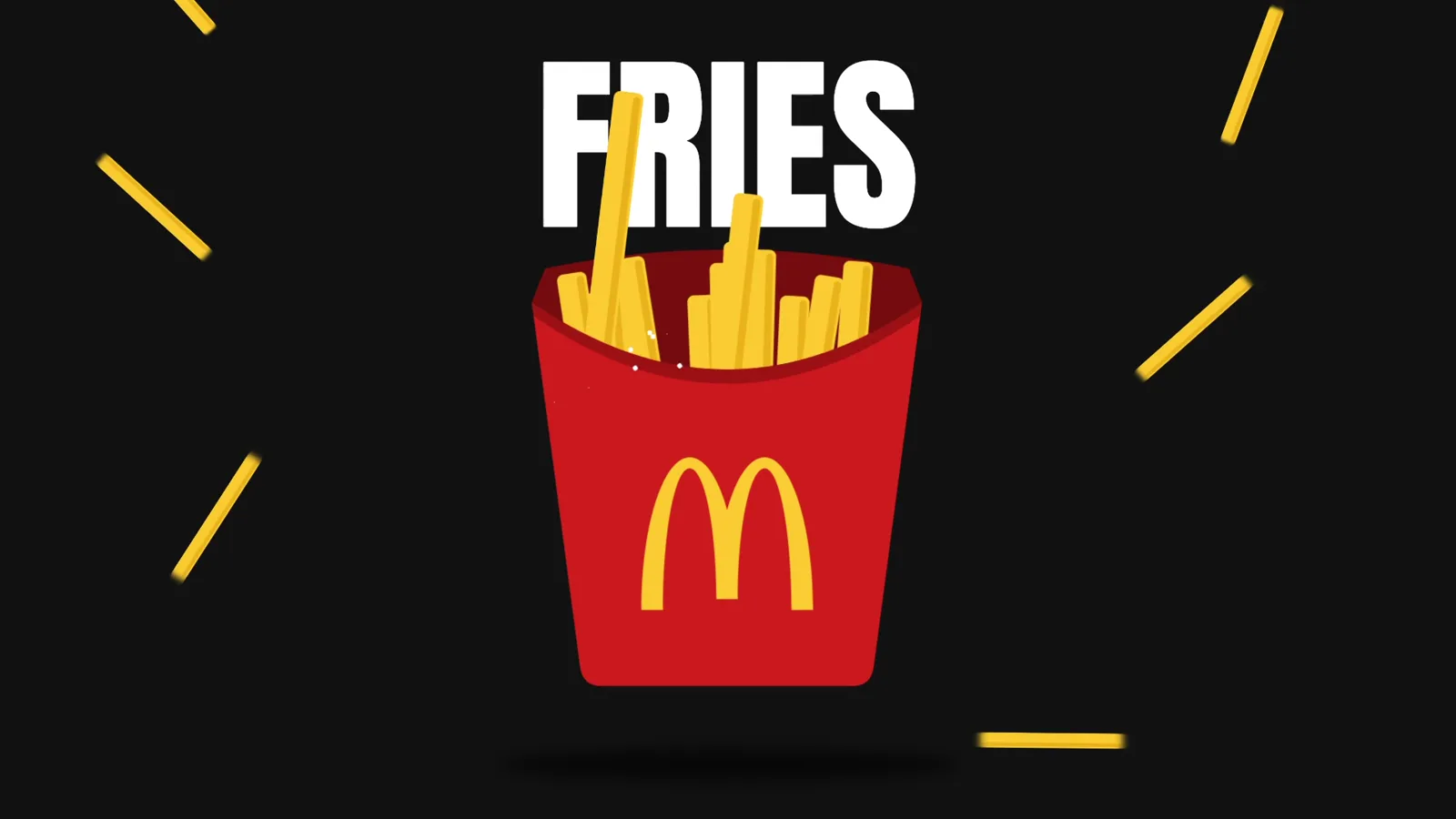
A diagonal black wipe at 441, the box lands at 450 with a cardboard sound, then 11 fries hit on 457, 465, 472, 480 and so on up to 532. The gaps alternate 8 and 7 frames: those are the sixteenth notes. Every fry gets two small sounds, each with its own stereo position, so the rain spreads across the speakers instead of coming from one point.
Shot 6 · Breather
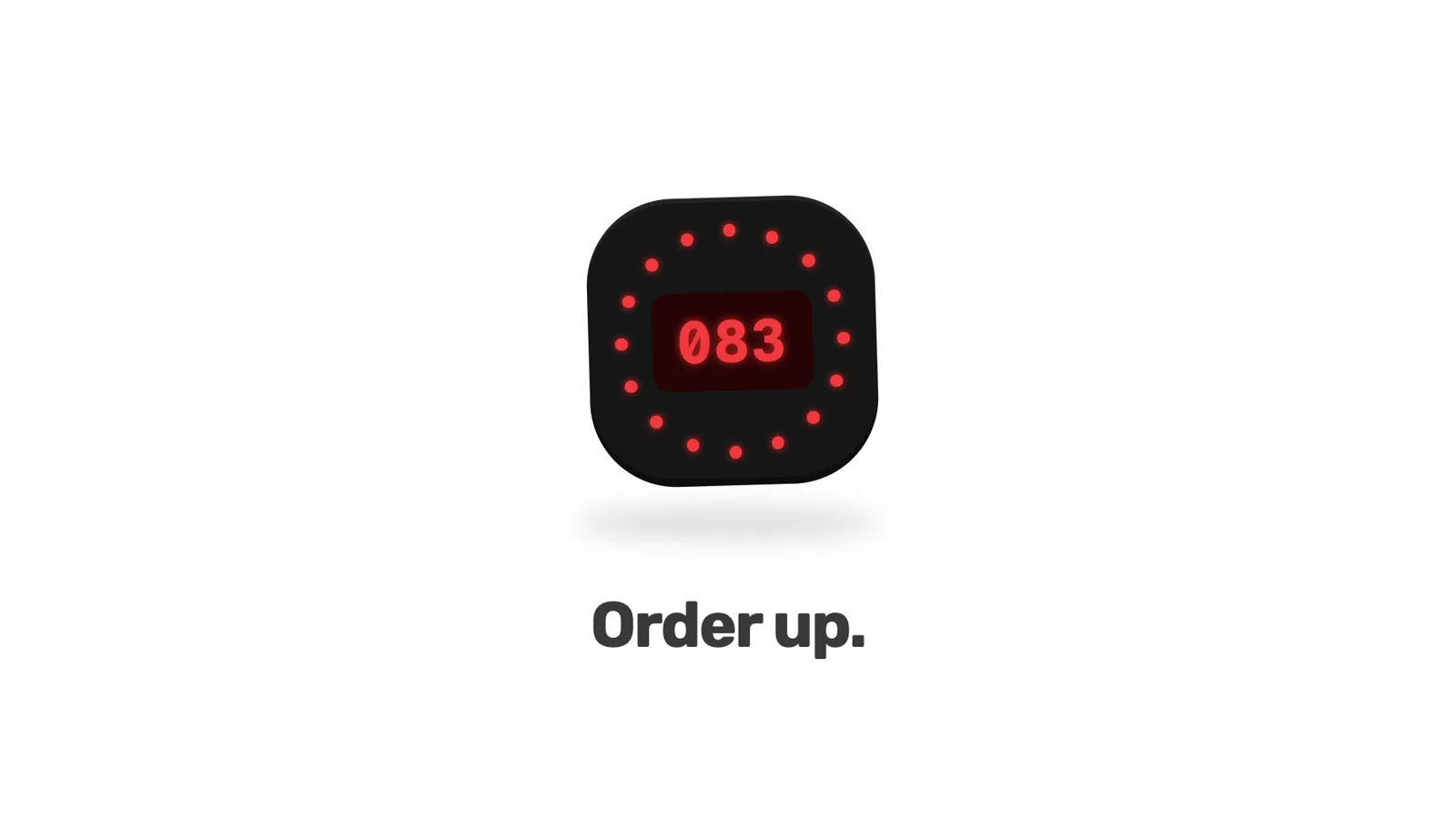
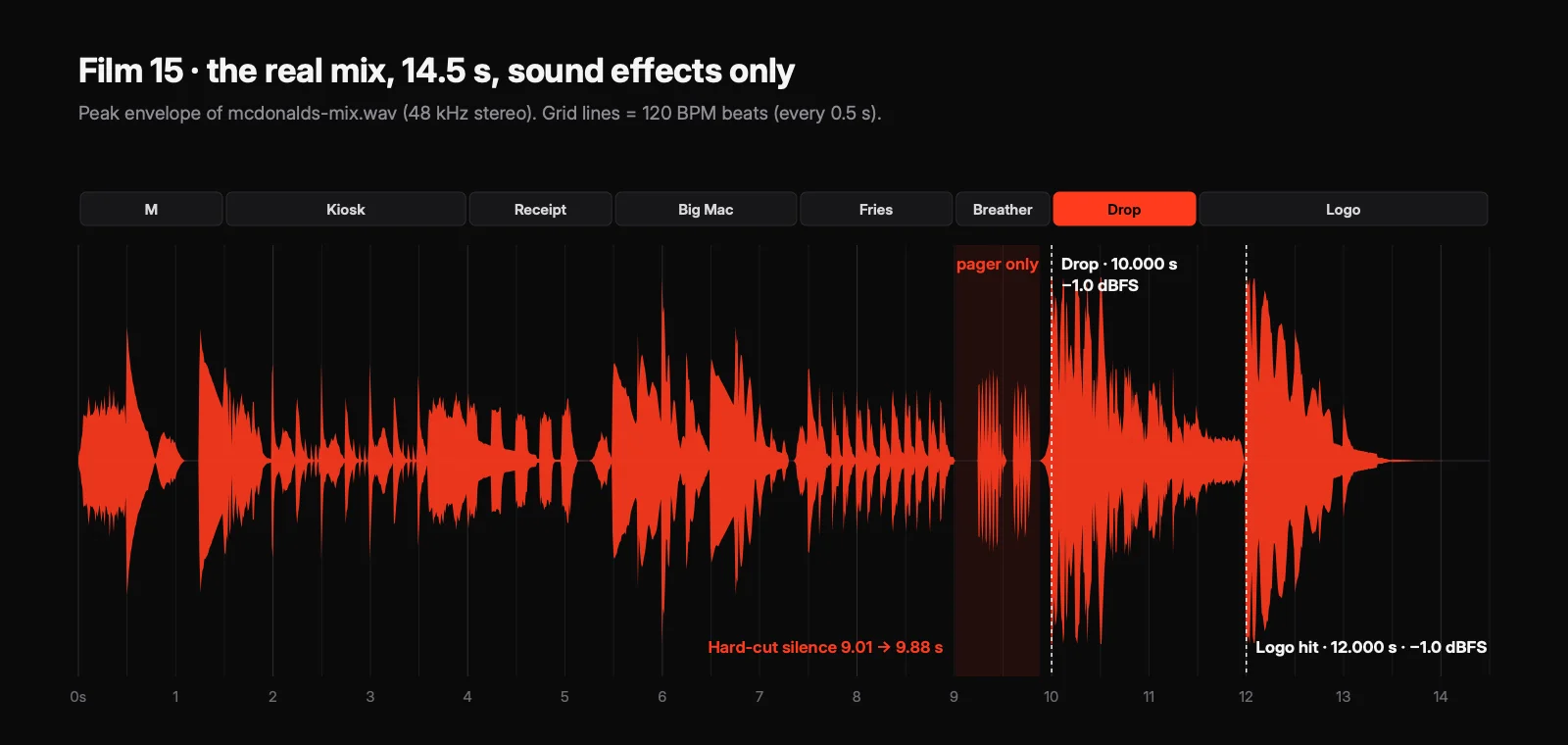
From 9.010 s to 9.880 s, the effect buses are multiplied by zero. Not a fade: a hard cut, which also chops the tails of the fries. Only the pager (two vibrations on 555 and 577, a small tick on “Order up.” at 570) and the suction before the drop exist in that gap. In the final WAV, several stretches of this window are exactly zero, digital silence.
That second of silence is what makes the drop hit.
Shot 7 · The drop and the Warhol grid
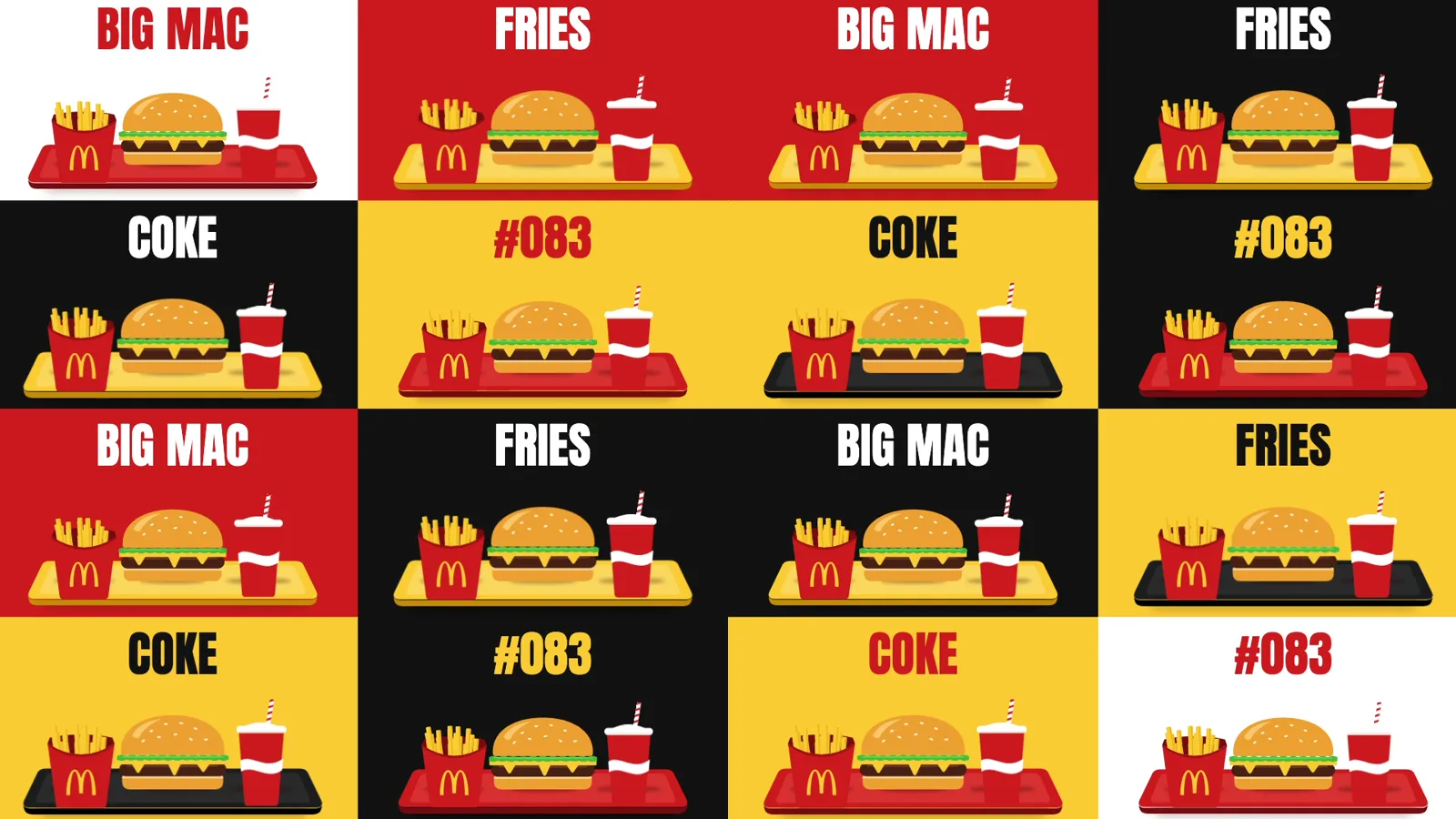
At frame 600, exactly 10.000 s, everything returns at once: yellow background, star burst, confetti, and the tray falling with the burger (607), the fries (615) and the Coke (622). “BIG MAC” punches at 630. The grid splits into 2×2 at 645, into 4×4 at 660, swaps palettes at 667 and 675, and zooms into one cell at 682. Under all of it, eight short kicks on the sixteenth notes from 630 to 682 drive the strobe.
Shot 8 · The logo and the line
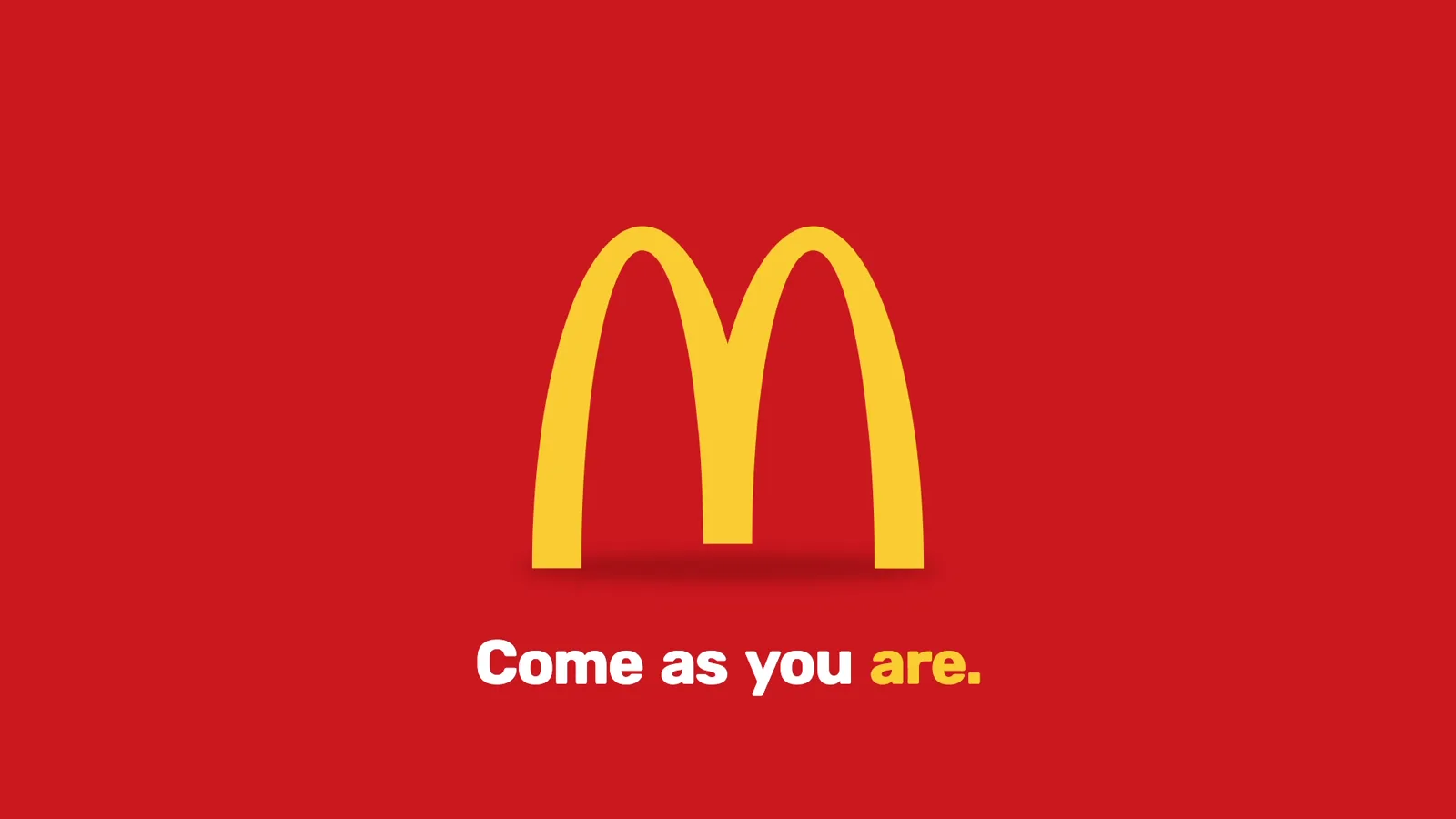
A white flash at 690, the M is redrawn in marker from 692, and the big impact lands at 720 (12.000 s), with a ring opening around the logo. The four words of the line appear on 735, 750, 765 and 780, one every 15 frames, each with a small pop panned from left to right. The last word switches to yellow.
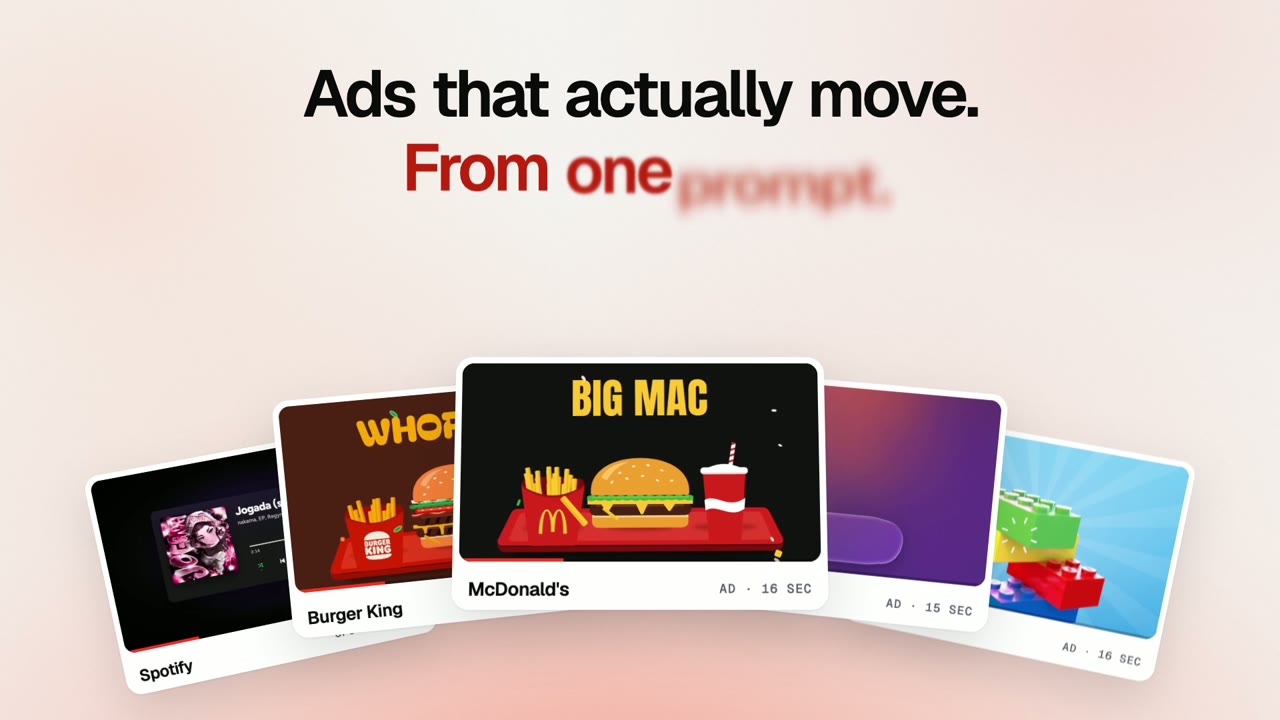
 The prompt behind this filmMcDonald's · Come as you are.15,453 words, ready for ClaudeSee the prompt
The sound design: synthesized, not downloaded
There is no sound bank in this film. Every sound is generated by a Python script (numpy and scipy) from simple building blocks: shaped noise, sine sweeps, filtered clicks. The script places 142 sounds on the timeline and writes one stereo WAV, 48 kHz, 16-bit, exactly 696,000 samples long (14.500 s). It also exports the 57 named sounds as separate files, so one sound can be fixed without redoing the mix.
The mixing chain is short:
- two buses (
fxandui) and a reverb send with a 1.1 s decay, used sparingly (the logo “ting” gets the most); - everything that rings past 14.5 s is folded back to the start of the file, so the film loops without a click;
- the raw peak was 2.2314, so the master is brought down by 5.05 dB, then a limiter with a −1.0 dBFS ceiling;
- final file: peak −1.0 dBFS, RMS −16.2 dBFS. We measured it again for this article: −1.00 and −16.22.
The prompt tells you exactly how to keep that structure when you swap the brand:
keep the structure. Only change the material: replace the fryer with the sound of your world (coffee machine, zipper, bubble…), the burger thuds with the knocks of your layers, the ice cubes with your object. Keep the gains, the pans, the silence from 9.01 to 9.88 s and the two big impacts at 10.000 s and 12.000 s.How it is built
The picture is React and TypeScript in Remotion 4.0.532. Everything is SVG and CSS: the burger, the fries, the cup, the tray, the kiosk, the receipt, the pager, the star, the confetti. The English film file is 1,249 lines, plus 218 lines for the drawn food library. The sound script is 365 lines on top of our shared synthesis library.
The only external pieces are three free Google fonts (Anton, Rubik and Geist Mono, all under the SIL Open Font License) and the path of the arches from the open-source simple-icons package. The icon set is CC0, but that does not make the logo free to use: the arches are a registered trademark.
The render command is in the prompt:
npx remotion render src/index.ts McDonaldsEN out/15_McDonalds_EN.mp4 \
  --codec=h264 --crf=10 --x264-preset=slow --image-format=png \
  --color-space=bt709 --audio-codec=aac --audio-bitrate=320k --concurrency=3
Our English HQ render took 3 min 34 s on our Mac, bundling included (18:21:36 to 18:25:10 in the log).
What changed between versions
From French to English
The original was made in French, in October, with the line “Venez comme vous êtes.”, McDonald's France's signature. For the English version we copied the composition and changed only the strings: dollars instead of euros with a decimal point ($5.90, $2.90, $2.60, $11.40), BUN / BEEF / CHEESE / LETTUCE / BUN for the layers, “Eat In”, “My Order”, “Place Order / Paid” on the kiosk, “Order up.” next to the pager, “#083” in the grid.
We did not invent “Come as you are.”. It is the English name McDonald's itself gave that French campaign when the press covered it. It also has four words, like the French line, so the four sound hits of the ending still land on four words. An independent review pass caught one weak label: “The Classics” became “Our Classics”, which reads like a real menu header.
The English picture was rendered muted and the original audio stream was copied in without re-encoding (identical checksum). Then we compared both versions frame by frame: 870 of 870 frames, no flicker, and the biggest differences exactly where the words change (LETTUCE vs SALADE, FRIES vs FRITES).
The disclaimer we removed
Our early films ended on a small “concept, not affiliated” caption. After reviewing our second series, we removed it from every film: the last frame belongs to the brand line. You can still see its ghost in the code: timeline.json keeps a legal: 795 entry that nothing reads anymore. The “unofficial concept” note now lives in the post caption, and in articles like this one.
From film to prompt: the blind test
Turning the film into a prompt was its own project. The English prompt is 15,453 words (16,570 for the French one). It describes every shot frame by frame, every spring, every colour, and the full sound cue sheet. It does not paste our source code: it is a specification in prose, tables and formulas.
To check it, we gave version 1 of the prompt to a fresh Claude Code session with nothing else but the sound file, and asked it to rebuild the film. It wrote about 1,400 lines of code, rendered the film in 1 min 32 s, and our comparison script found 870 of 870 frames matching, with a median difference of 0.03 and no spikes. One visible gap remained: on frames 720 to 725, the ring around the logo was born about 28 px off centre.
That is why the prompt opens with this rule:
Every number in this document is a production value. Do not round it, do not “improve” it, do not replace a curve with another one that “looks the same”.What you can reuse for your own ad
The last part of the prompt is about adapting the film to your brand, and the rule is simple: keep every frame of the timing table, change the clothes. Concretely:
- Logo: your symbol as an SVG, with a single continuous centre line so the marker drawing still works.
- Colours: three bold colours that answer each other, or the grid of the drop goes flat.
- Product: shot 4 needs something that stacks (a sandwich, a cake, folded clothes, boxes). Keep 5 layers to keep 5 beats.
- Line: exactly four words, to keep the four pops.
- Trademarks: never reuse McDonald's logo, name or slogan in your version.
We used that formula ourselves for our Burger King concept (film 26), and one of our rhythm tutorials embeds this exact film, cutting on its real 120 BPM score. If you want the method behind the grid, the springs and the sound, it is in Ugoki Academy. If you want the 15,453-word prompt and the sound pack, it is on the film 15 page; plans are on the pricing page. For an interface-led film from the same catalogue, look at Spotify, film 04.